WatchGuard industry security

Manufacturing

Reduce ransomware, remote-access and IT/OT risks while maintaining production availability across factories and distributed sites.

Industry overview

Manufacturers are connecting production, engineering, business applications, cloud services and remote specialists at a faster rate. This improves efficiency but creates pathways between traditional IT and operational environments that were not designed for modern cyber threats.

ITMAP ASIA helps partners build practical WatchGuard architectures for factories, warehouses, offices and remote users. The focus is controlled segmentation, secure access, endpoint protection, central visibility and incident readiness without introducing unnecessary production risk.
Security priorities

What the organisation needs to protect and enable.

01

Protect production continuity

Reduce the probability and blast radius of incidents that could stop operations.

02

Separate IT and OT

Apply controlled network boundaries between business, engineering and production systems.

03

Secure remote access

Limit employees, contractors and equipment vendors to authorised resources.

04

Address legacy risk

Isolate or virtually protect systems that cannot be patched normally.

05

Standardise site security

Apply consistent policies across factories, warehouses and offices.

06

Prepare for recovery

Combine monitoring, containment, backups and tested incident procedures.

Industry risk profile

Common attack paths and operational exposure.

Risk must be validated against the organisation’s real environment, threat model and business impact.

01

Ransomware affecting production

Disruption creates operational and financial pressure.

02

Legacy or unpatched systems

Industrial and specialised systems may have limited update options.

03

IT/OT convergence

New connectivity can expose production systems to threats originating in office or remote environments.

04

Third-party remote access

Vendors may require privileged access to equipment and applications.

05

Flat or undocumented networks

Inadequate segmentation makes containment difficult.

06

Distributed-site inconsistency

Different configurations and support models create visibility gaps.

Operational requirements

Controls must fit how the organisation actually works.

Compliance names and legal obligations vary by country and organisation. Confirm applicable Vietnamese requirements independently.

01

Asset and traffic discovery

Understand critical systems, dependencies, protocols and authorised connections.

02

IT/OT segmentation

Define zones, conduits and firewall policies appropriate to operational risk.

03

Controlled remote access

Use identity, MFA, approval and logging for employees and external vendors.

04

Availability-aware change control

Test changes and maintain rollback procedures around production schedules.

05

Endpoint coverage

Protect supported engineering, office and server systems without disrupting specialised workloads.

06

Incident and continuity planning

Define isolation, communication, recovery and backup procedures.

Recommended architecture

WatchGuard layers commonly considered for this environment.

Products, subscriptions and service coverage must be sized and confirmed for the project.

01

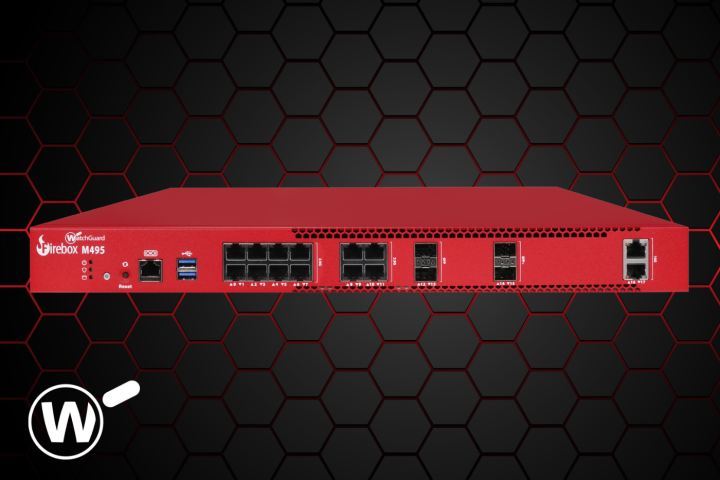
WatchGuard Firebox

Segment factories, offices, production zones, WAN links and vendor access.

02

WatchGuard Endpoint Security

Protect supported business, engineering and server endpoints with prevention and EDR.

03

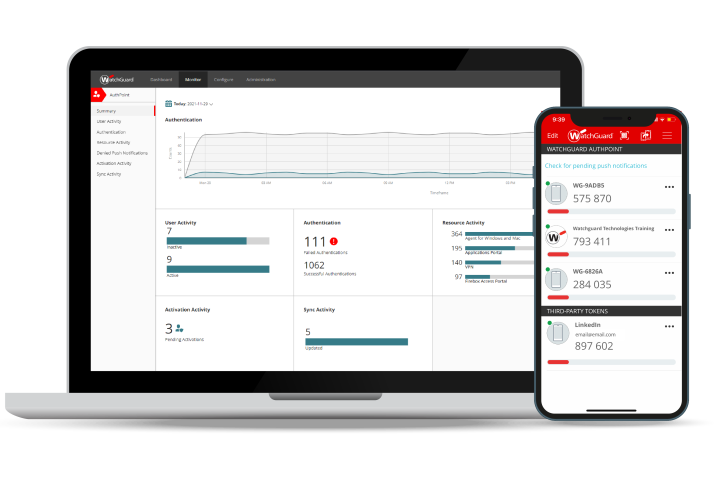
AuthPoint MFA

Strengthen remote, privileged and supported application access.

04

WatchGuard Secure Wi-Fi

Provide segmented wireless connectivity for staff, operations and approved devices.

05

WatchGuard Cloud

Centralise management and reporting across distributed facilities.

06

ThreatSync XDR or MDR

Improve detection, investigation and containment where supported by the chosen architecture.

Common use cases

Where the architecture is applied.

+

IT/OT network segmentation

Control traffic between office, engineering, production and management zones.

+

Secure vendor maintenance

Restrict third-party users to approved systems and access windows.

+

Factory ransomware protection

Combine endpoint, network and identity controls to reduce attack paths.

+

Multi-factory management

Standardise policies and visibility across geographically distributed sites.

+

Warehouse and logistics connectivity

Protect wireless, handheld, operational and back-office systems.

+

Legacy-system risk reduction

Isolate systems that cannot be updated or protected directly.

Frequently asked questions

Clarify architecture and responsibility before implementation.

Can a firewall secure an entire OT environment by itself?

No. Firewalls support segmentation and inspection, but effective OT security also requires asset knowledge, access governance, monitoring, safe change control and recovery planning.

How should legacy production systems be handled?

Where patching is not possible, organisations can reduce risk through isolation, strict allow-list policies, monitored access and compensating controls.

Can vendors access equipment remotely?

Yes, but access should be approved, authenticated, restricted, logged and removed when no longer required.

How is security introduced without stopping production?

Use discovery, lab or staged testing, maintenance windows, backups, rollback and coordination with operations and equipment vendors.

Industry consultation

Translate operating requirements into a practical WatchGuard architecture.

ITMAP ASIA will review the environment, risks, critical systems, users and project target before recommending products, licences and the next delivery step.

Request a Quote